Leading the Next Era of Intelligent Industry
Sayan Navaratnam is an entrepreneur and investor focused on building companies that harness technology to drive long-term economic growth. His work centers on advancing responsible AI adoption that enhances human capability and prepares the workforce for the industries of tomorrow.
AI Should Strengthen the Workforce — Not Replace It
Artificial intelligence represents one of the most significant technological shifts of our time. When implemented responsibly, it has the potential to improve productivity, accelerate innovation, and help businesses solve complex problems at scale.
For Sayan Navaratnam, the future of AI is not about replacing human talent — it is about enhancing it. The most successful organizations will be those that use AI to empower people, elevate skills, and unlock new forms of economic opportunity.
“The goal of artificial intelligence should never be to replace people - it should be to elevate what people are capable of achieving.”
Leading the Responsible Adoption of AI
Human-Centred Innovation
The most powerful applications of AI will enhance human capability, allowing people to focus on higher-value, creative, and strategic work.
Stronger Industries
When used responsibly, AI can help organizations operate more efficiently, build resilient businesses, and create more sustainable growth.
Responsible Adoption
AI should be introduced thoughtfully, with strong governance and a clear focus on long-term economic and societal benefit.
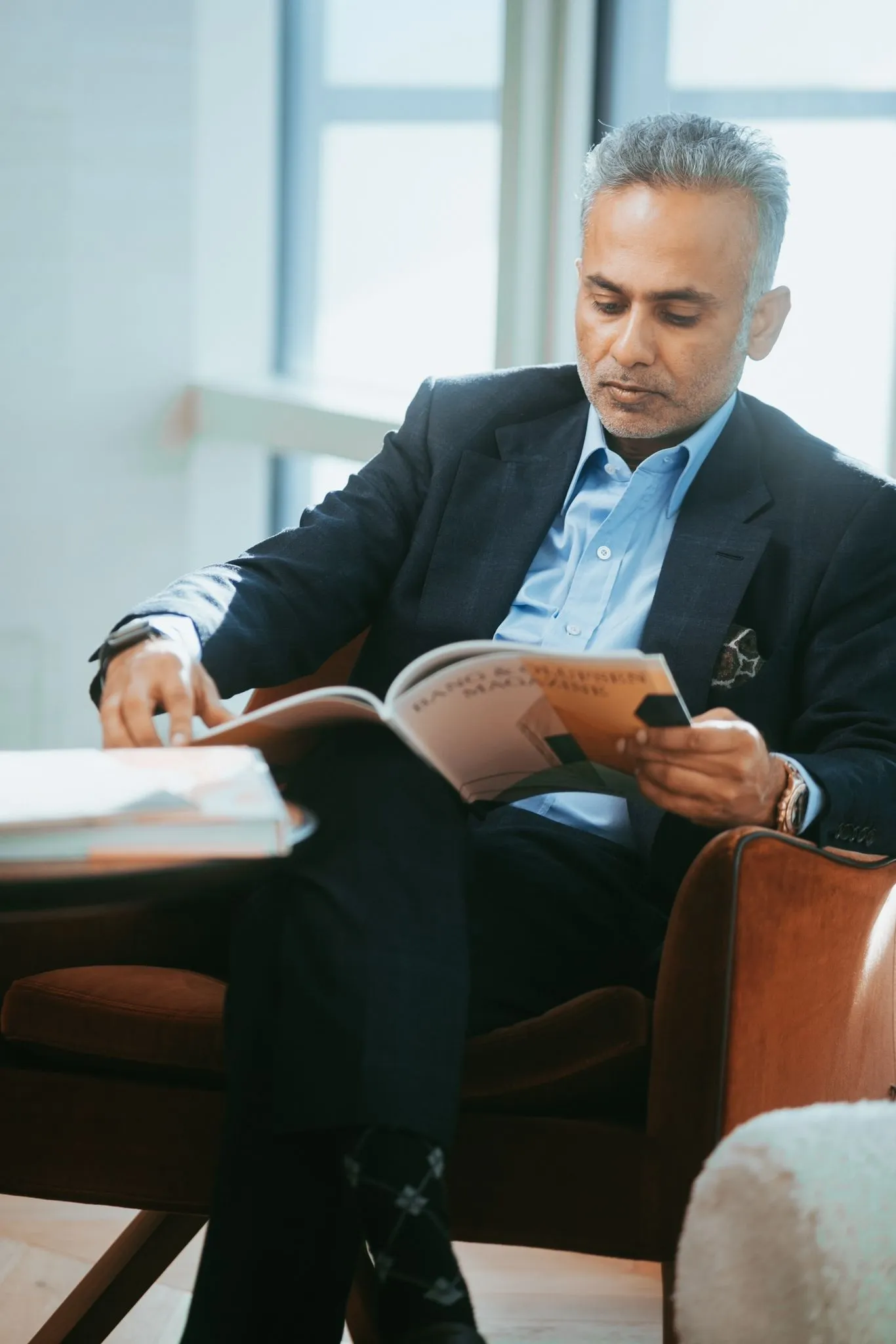
About Sayan
Sayan Navaratnam is the founder and CEO of The Malar Group of Companies, where he acts as a strategic investor and company builder focused on scaling high-potential businesses. Since founding Malar in 2012, he has built a reputation for identifying untapped market opportunities and partnering with entrepreneurs to transform companies into industry leaders. He believes building a healthy culture is important to success, and goes well beyond just business impact
Malar’s investment strategy focuses on innovation-driven sectors such as technology platforms, infrastructure, mobility, and digital enterprise solutions. Navaratnam applies his “4M Framework” - Market, Material offering, Management, and Money - to identify promising opportunities and guide the growth of innovative companies including Connex, Pneutech-Rousseau, and FoodsUp.
His approach emphasizes long-term value creation and patient capital, removing operational and financial barriers so entrepreneurs can focus on innovation and execution. Through hands-on mentorship, strategic infrastructure, and people-centred leadership, Navaratnam has positioned The Malar Group as a platform for sustainable company building and transformative investment across North America.
Thoughts and Ideas
Sayan shares his thoughts and idea on AI, innovation, and the future of the global workforce.